
Collective kitchens and the conditions for ensuring food safety and hygiene
Nowadays, collective kitchens are becoming increasingly common in schools, hospitals, and organizations. Therefore, food safety issues are gaining more attention. This article will help clarify some concerns and outline the conditions for ensuring food safety and hygiene in collective kitchens.
What is a Collective Kitchen? Is a Collective Kitchen a Food Service Establishment?
According to Clause 5, Article 2 of the 2010 Food Safety Law:
“A food service establishment is a facility that processes food, including stores, food stalls selling ready-to-eat foods, cooked foods, restaurants, catering establishments, canteens, and collective kitchens.”
Therefore, a collective kitchen is a type of food service establishment.
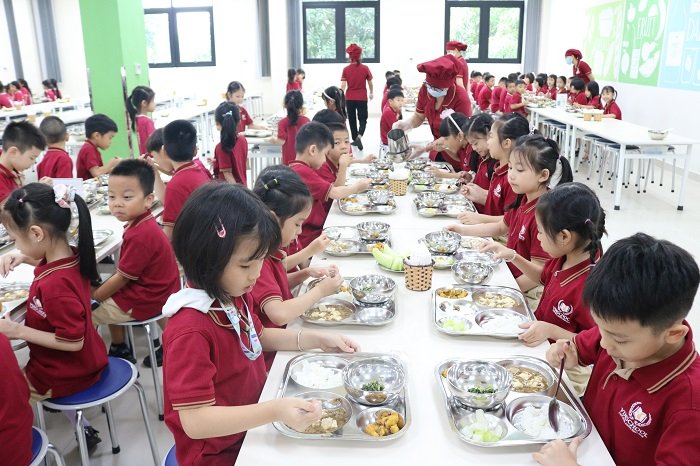
Illustrative image. Source : Collectible
-
Bếp ăn tập thể có cần phải được cấp Giấy chứng nhận cơ sở đủ điều kiện an toàn thực phẩm không?
Do Collective Kitchens Need a Certificate of Food Safety Eligibility?
According to Clause 1, Article 11 of Decree 15/2018/ND-CP guiding the Food Safety Law:
“Food production and business establishments must have a Certificate of Food Safety Eligibility when operating, except for cases specified in Clause 1, Article 12 of this Decree.”
Clause 1, Article 12 of this Decree specifies:
“The following establishments are not required to obtain a Certificate of Food Safety Eligibility:
a) Small-scale primary production;
b) Food production and business without a fixed location;
c) Small-scale preliminary processing;
d) Small-scale food trading;
e) Trading in prepackaged foods;
f) Production and business of tools, packaging materials, and containers for food;
g) Restaurants within hotels;
h) Collective kitchens that do not register food business as a business line;
i) Street food businesses;
k) Establishments that have been granted one of the following certificates: Good Manufacturing Practices (GMP), Hazard Analysis and Critical Control Points (HACCP), ISO 22000 Food Safety Management System, International Food Standards (IFS), Global Standards for Food Safety (BRC), Food Safety System Certification (FSSC 22000) or equivalent and still valid.”
Therefore, collective kitchens need a Certificate of Food Safety Eligibility when operating, except for cases specified in Clause 1, Article 12 of the mentioned Decree.
Illustrative image. Source : Collectible
Conditions for Setting Up Collective Kitchens
Conditions for Ensuring Food Safety in Food Processing and Food Service Areas
- The kitchen layout must prevent cross-contamination between raw and cooked foods.
- Sufficient water supply that meets technical standards for food processing and business operations.
- Proper waste collection and disposal tools to maintain hygiene.
- Drainage systems in stores and kitchen areas must be unobstructed and not stagnant.
- Dining areas should be well-ventilated, cool, and adequately lit, maintaining cleanliness and having measures to prevent insects and pests.
- Equipment for food storage, sanitation facilities, handwashing stations, and daily waste disposal must be available and clean.
- The head of the unit with the collective kitchen is responsible for ensuring food safety.
Conditions for Ensuring Food Safety in Food Processing and Food Service Establishments
- Separate utensils and containers for raw and cooked foods.
- Cooking and processing utensils must ensure hygiene and safety.
- Eating utensils must be made from safe materials, cleaned, and kept dry.
- Compliance with health regulations, knowledge, and practices of individuals directly involved in food production and business.
Conditions for Ensuring Food Safety in Food Processing and Storage
- Food and food ingredients must have a clear origin and ensure safety, with food samples kept for reference.
- Food must be processed to ensure safety and hygiene.
- Food on sale should be displayed in hygienic glass cabinets or storage devices to protect against dust, rain, sun, and pests; it should be sold on tables or shelves raised above the ground.
Regardless of whether a Certificate of Food Safety Eligibility is required, meeting the above conditions will help create a safe and reliable environment for collective kitchen products. This also contributes to the effectiveness of investment and construction of these facilities.

Illustrative image. Source : Collectible
This article has partially addressed the concerns that collective kitchens are one type of food service establishment. Collective kitchens must obtain a Certificate of Food Safety Eligibility when operating (except for certain cases mentioned above). It also outlined several food safety conditions for collective kitchens in particular and food processing and service establishments in general. We hope this information will be helpful to our readers!
Source: thuvienphapluat